The road behind Blindly Wheeling
Social care, technology, hospitality, tourism, writing, and years of noticing what happens when disabled people try to take part in the world as it is.
Where the work starts
Access has never been a theory exercise for me. It’s the difference between feeling expected and feeling like an afterthought.
A door, a route, a sign or a welcome can change the whole tone of a visit, because people feel the detail.
Two cafés, both with a step at the door. One apologises and leaves it. The other says, “Give us a moment, we’ll bring the ramp out,” and does it with ease. Same barrier, completely different experience.
Across sectors and settings
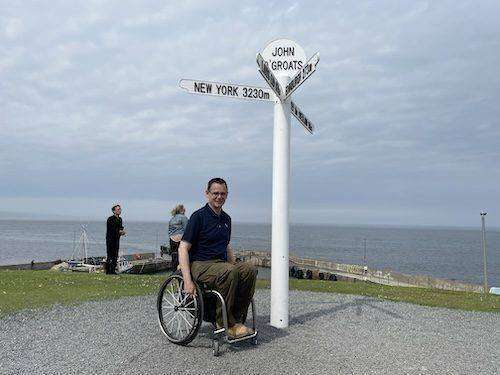
From visitor experiences to hospitality and heritage, I help organisations think more clearly and act more practically. That means looking at routes, doors, signage and seating, and asking one simple question: does this actually work for someone using it?
It’s not about perfection. It’s about testing, refining, and making things work on a wet Tuesday afternoon, not just in a meeting room.
Right now, not someday
Accessibility isn’t a finished project. What matters is what someone experiences today, as they arrive, move through a space, and decide whether they feel welcome enough to return.
A venue might not yet have perfect physical access. But it can make sure staff are confident, its website is clear, and small adjustments happen without fuss. Those changes happen straight away, and progress doesn’t need to wait for the “right time”.
A bit more of the road behind me
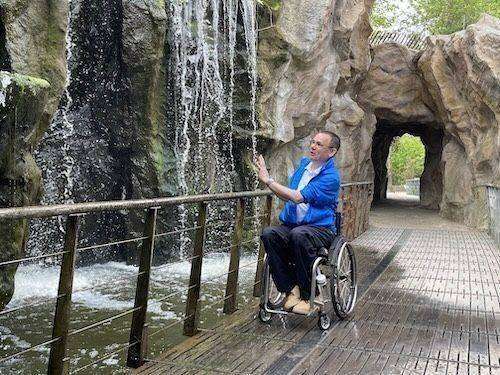
This work didn’t appear from nowhere. It was shaped by careers across social care, technology, writing and tourism, and by navigating much of that as a disabled person myself.
Doors technically open, but journeys that stayed exhausting. Policies that sounded inclusive, but still needed extra negotiation. Those contradictions sharpened rather than shrank my ambitions: I’ve spent much of my life proving that disabled people shouldn’t have to lower their expectations to participate. My work is about helping organisations raise theirs instead.
Working with Euan’s Guide, VisitScotland, Historic Environment Scotland, Diageo and others let me bring lived experience and professional perspective into the same conversation: not theory from a distance, but insight shaped by real journeys.
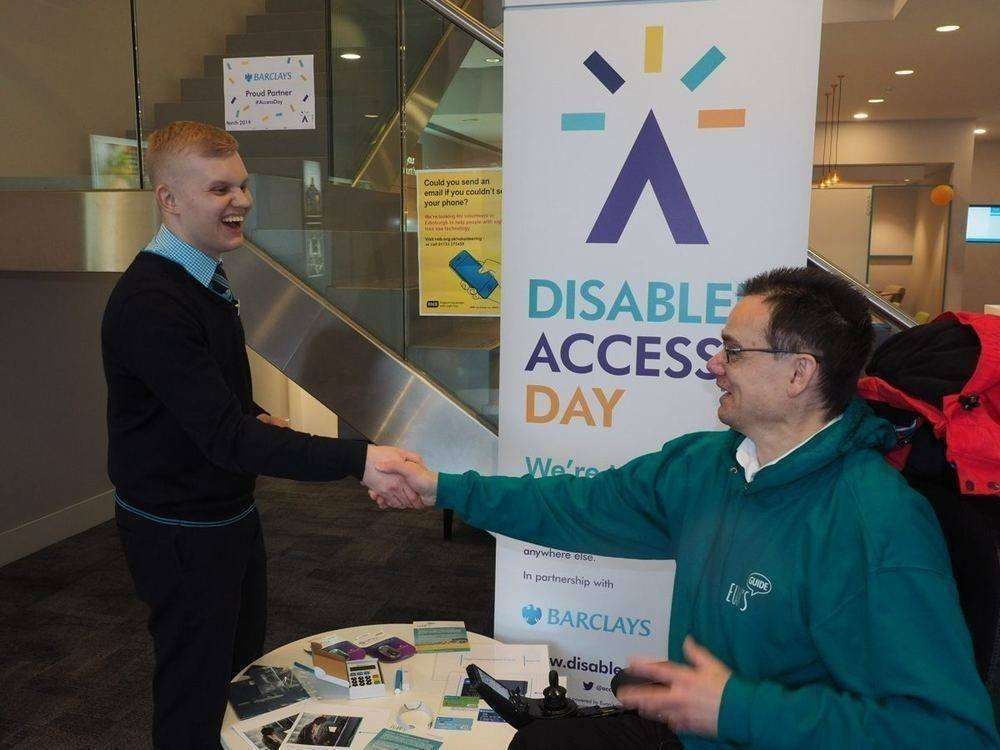
Disabled Access Day
It began with something ordinary: wanting to try something new without the usual stress or feeling in the way. The spark, for me, was trying my powerchair on a bus for the first time in a calmer setting. It felt liberating, and led to a bigger question: what if more disabled people had the chance to try things out, ask questions, and explore somewhere new?
The first event in 2015 saw 261 venues across 11 countries and over 1,000 people take part. By 2016 that had grown to 1,067 venues and an estimated 10,848 people. After 2019 it moved to a biennial rhythm, and ownership shifted to local communities, which felt right. Access is strongest when it’s rooted in real places and real people.
Early reports
Reports from the first few years, while the day was still finding its shape.
The Euan’s Guide years
For around ten years, a big part of my work was visiting places, noticing what worked, and writing honestly about the gap between access on paper and access in practice. I published more than 500 reviews on Euan’s Guide, alongside many more visits that never made it online.
Euan MacDonald, who founded Euan’s Guide together with his sister Kiki in 2013, was a great friend: warm, funny, and diagnosed with Motor Neuron Disease in 2003 at 29. He dedicated his life to improving disabled access and supporting MND research. Euan died in 2024; I dedicated Access All Areas: Inclusive tourism in practice to him.
Accessibility is rarely about one dramatic barrier. More often it’s a chain of smaller moments where confidence grows, slips, or quietly disappears.
Visiting hundreds of places teaches you to spot patterns fast: where physical design helps, where staff confidence changes everything, and how access is never one feature but how everything comes together.
Before all this
Before Blindly Wheeling, before Disabled Access Day, there was a working life quietly laying the groundwork: social work, hospitality, technology. Social work taught me to pay attention to real lives over neat assumptions. Hospitality taught me that welcome matters, and people notice quickly whether it’s genuine. So when Blindly Wheeling arrived, it wasn’t a reinvention. It was all those earlier pieces finally introducing themselves to each other.
Media & publications
Publications
- Information Alternatives: A guide to providing accessible information
- The Access All book series: Areas, Events, and Info
- Go Beyond the Guidelines, written together with BRC Imagination Arts (2023)
- Contributor to Constitution Street by Jemma Neville
Talks & projects
- Speaker at AnyRoad Conference, Edinburgh (2023)
- Contributor, Brand Experience Center Conference, Dublin (2026)
- Accessibility work with Diageo, including Johnnie Walker Princes Street
- Judge and presenter, Accessible Edinburgh Festivals Awards